
Protein powder in New Zealand: the quick answer
Protein powders sold in New Zealand commonly include whey concentrate, whey isolate, casein, soy, pea and blended plant proteins. To compare them, start with the nutrition information panel: protein per serving and per 100 grams, the serving size, the ingredient list, allergen declarations and any added ingredients. Protein powder is a concentrated convenience food — not automatically necessary, and not inherently superior to ordinary protein-containing foods.
The rest of this guide explains the main types, how to read a label, how these products are regulated here, and what the research does and does not establish. It does not recommend brands, rank products, or set a protein target for you.
What is protein powder?
Protein powder is a concentrated, food-derived protein ingredient — usually dried and milled from a dairy or plant source, then sometimes flavoured or combined with other ingredients. The useful thing to understand is that “protein powder” is a broad description, not a single product. Individual products vary substantially in their ingredients, processing, nutrient composition, the claims on the pack, and their legal classification.
Because of that, it is a mistake to assume every protein powder is the same kind of product in the eyes of the rules. Some are sold as general foods, some as formulated supplementary sports foods, and the category a specific product falls into can depend on its ingredients, its presentation, the claims it makes and its form. The words on the front of the pack do not settle that question by themselves — more on that below.
Main types of protein powder
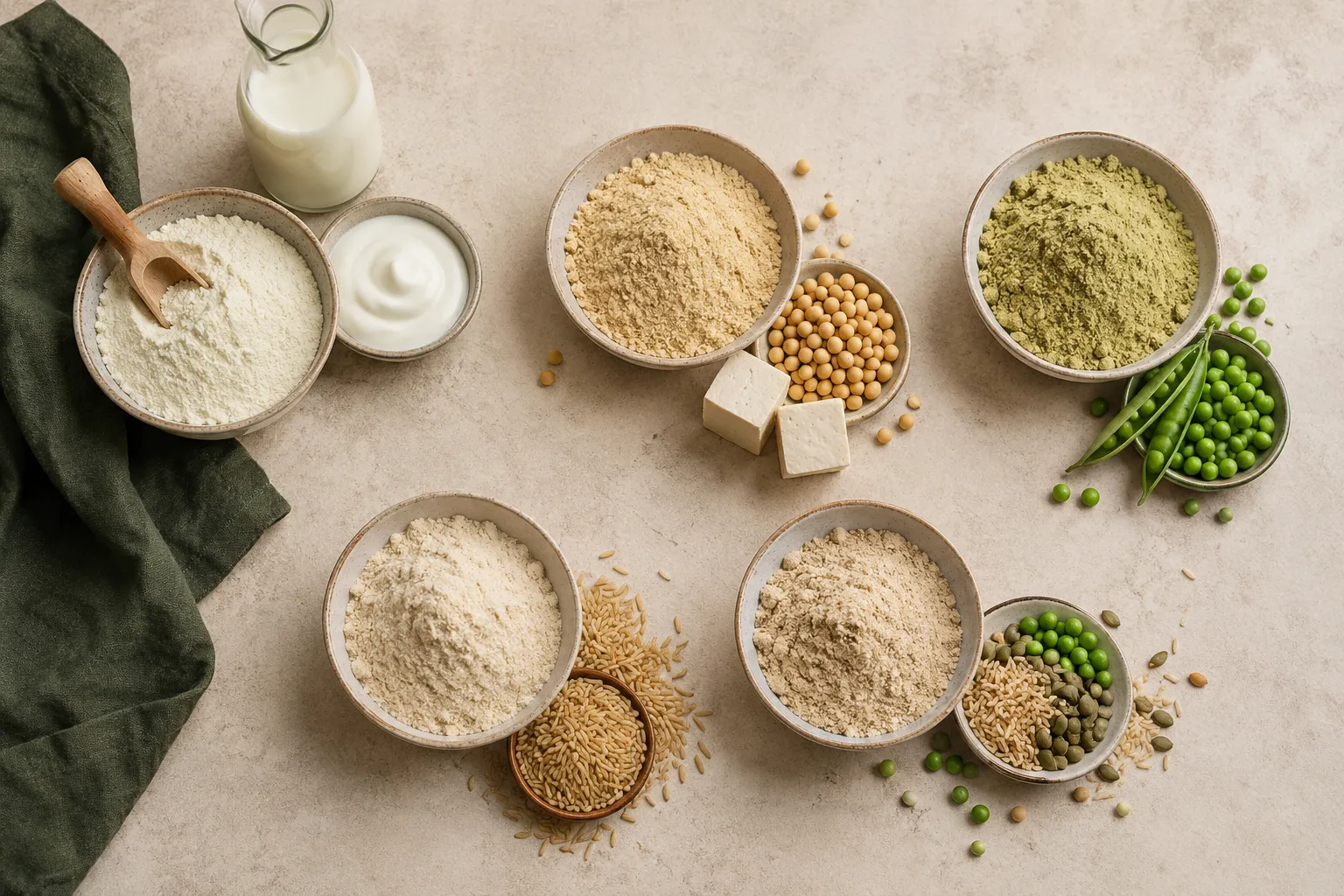
The table below sets out the sources you will most often see on New Zealand shelves. It deliberately avoids naming any one type “best”: the right choice depends on your diet, tolerances and preferences, not on a universal ranking. Actual protein, carbohydrate, fat and allergen content must always be read from the specific product’s panel — the notes here are general.
| Type | Source | Common characteristics | Allergens / dietary notes | What the evidence does and does not establish |
|---|---|---|---|---|
| Whey concentrate | Milk (dairy) | The whey fraction of milk; contains protein alongside some lactose and fat, in proportions that vary by product | Contains milk; usually contains lactose | A complete protein used in many resistance-training studies; the panel — not the name — shows a given product’s actual protein content |
| Whey isolate | Milk (dairy) | More filtered than concentrate, so it is typically higher in protein per serving with less lactose and fat — but the real figures must be read on the panel | Contains milk; often lower in lactose (check the label) | Also a complete protein; evidence does not show it is categorically “healthier” or necessary — the differences are compositional |
| Casein | Milk (dairy) | The other main milk protein; digested more slowly than whey | Contains milk | A complete protein studied in muscle-protein research; slower digestion is a feature, not a proven practical advantage for most people |
| Soy protein | Soybean (plant) | A plant protein that supplies all the essential amino acids | Contains soy (a declarable allergen) | Generally regarded as a higher-quality plant protein; practical outcomes still depend on total intake and the wider diet |
| Pea protein | Yellow pea (plant) | A plant protein; relatively lower in the amino acid methionine than some other sources | Not a top declarable allergen, but check added ingredients and cross-contamination statements | Can contribute to resistance-training outcomes in studies when total protein is adequate; its amino-acid profile is one factor among several |
| Blended plant protein | Combinations (e.g. pea and rice) | Blends aim to complement the amino-acid profiles of different plant sources | Depends entirely on the blend — read the ingredient list | Blending can round out amino-acid profiles; total diet and quantity matter more than any single blend claim |
| Collagen | Animal connective tissue (bovine or marine) | Compositionally different: low in, or lacking, some essential amino acids, so it is not a complete protein | May be fish-derived (marine collagen) — check the label | Should not automatically be treated as interchangeable with complete dietary proteins for general protein needs; evidence for specific collagen claims is a separate, and often limited, question |
There is no protein powder that is universally best. A dairy protein is unsuitable for someone avoiding milk; a single plant source may be chosen — or blended — for amino-acid balance; and collagen answers a different question again. Match the product to your own situation, not to a marketing hierarchy.
How protein powder is regulated in New Zealand
Food labelling and composition in New Zealand sit under a shared trans-Tasman system, and it is worth understanding who does what.
- Food Standards Australia New Zealand (FSANZ) develops the Australia New Zealand Food Standards Code, the rule book that sets out labelling, composition and claims requirements.
- New Zealand Food Safety, part of the Ministry for Primary Industries (MPI), is responsible for administering and enforcing the relevant food-labelling requirements in New Zealand.
- Formulated supplementary sports foods — products formulated to help meet the nutritional needs of people undertaking strenuous physical activity — are addressed by Standard 2.9.4 of the Code, one of the sports-food categories FSANZ describes.
The important consequence is that a specific product’s category can depend on its ingredients, its format, its intended use and the claims it makes. Readers should not assume that the words “supplement” or “protein powder” determine the legal category by themselves. Any nutrition content or health claims must comply with the applicable requirements in the Code — a topic we cover in our guide to what supplement labels can claim in New Zealand.
This is a general explanation of the framework, not legal advice, and it does not classify any individual product.
How to read a protein-powder label
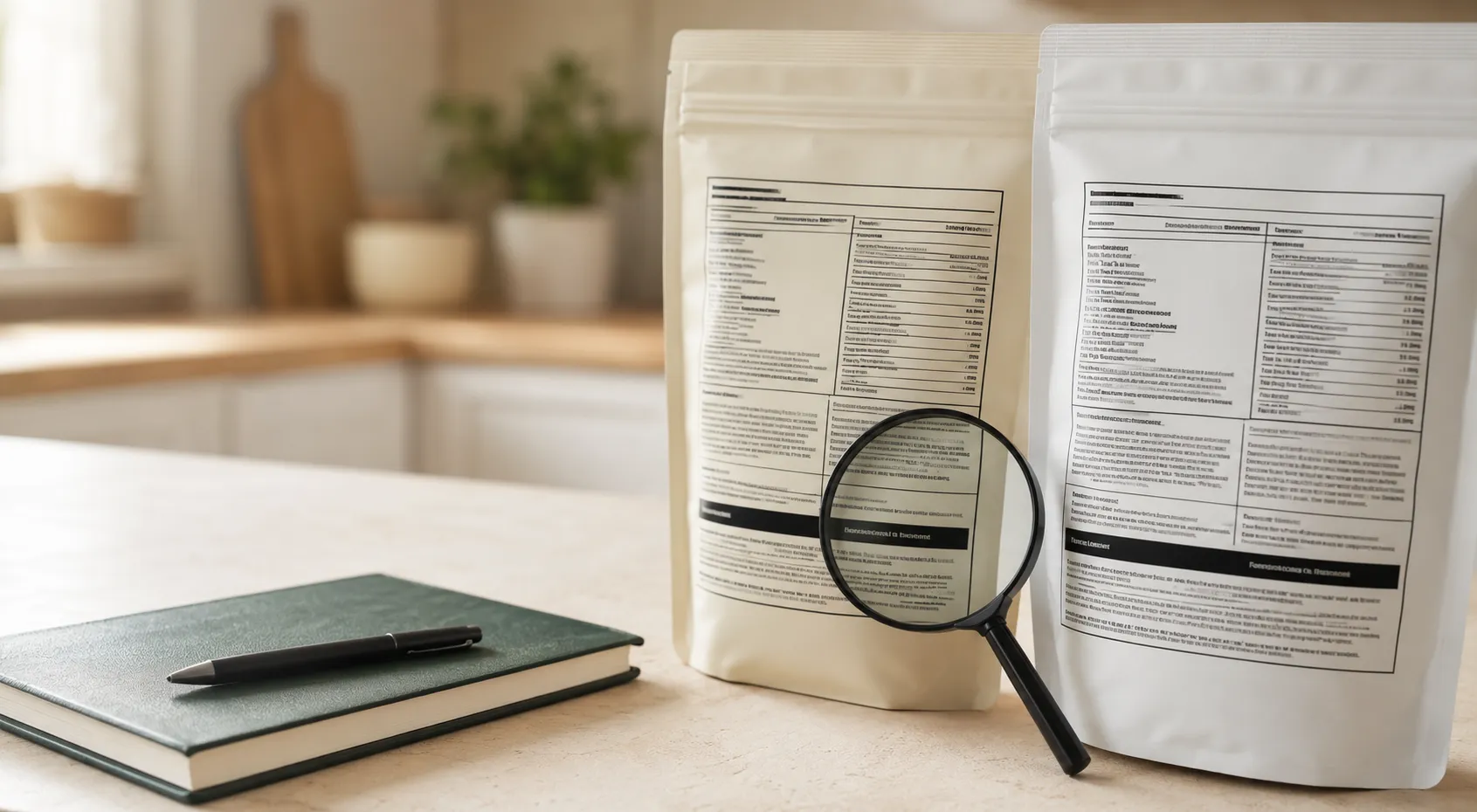
The nutrition information panel and ingredient list are the honest part of the pack. Here is a neutral, step-by-step way to read one — no scoring, no “good versus bad”, just what to look at and why.
- Check the stated serving size. Everything on the panel is anchored to it, and serving sizes are set by the manufacturer.
- Check the grams of protein per serving. This is the figure most front-of-pack claims are built on.
- Use the per-100-gram column where available. Because it is standardised, it lets you compare two products more fairly than per-serving figures. Our nutrition information panel guide explains why.
- Read the complete ingredient list. Ingredients are listed in descending order by weight, so the first items make up most of the product.
- Check milk, soy and other allergen declarations. These must be declared when present — see the allergen step below.
- Read energy, carbohydrate, sugars, fat, saturated fat and sodium in context — a protein claim says nothing about these.
- Identify sweeteners, flavourings, caffeine or other added active ingredients. Some products add stimulants or other actives that are not “protein” at all.
- Separate the regulated panel from front-label marketing language. The panel and ingredient list are governed by the Code; the slogans on the front are not the same thing.
- Check any warnings and directions required for that product’s category. Formulated supplementary sports foods, for example, carry specific advisory statements.
- For competitive athletes, weigh the separate risk of undeclared or contaminated ingredients — covered in its own section below.
For the official plain-language walkthroughs, New Zealand Food Safety’s how to read food labels page and FSANZ’s allergen labelling guidance are the primary references. This is also the same skill set behind reading a high-protein claim on any food label.
Whey concentrate versus whey isolate
Both whey concentrate and whey isolate come from milk — they are two forms of the same milk-protein fraction, processed to different degrees. In general terms, isolate is filtered further, which tends to leave it higher in protein per serving with less lactose and fat than concentrate. Those are directional differences, not fixed figures: the actual protein, lactose, carbohydrate and fat content varies between products and must be checked on the specific nutrition information panel.
Being more processed does not make isolate automatically “healthier”, nor does it make it necessary. For someone who tolerates lactose and is meeting their needs, concentrate may be perfectly appropriate; for someone who is more lactose-sensitive, a lower-lactose isolate may sit better. It is a match-to-your-needs decision, not a ranking.
Plant protein powders
Soy, pea and blended plant powders are all reasonable protein sources, and it is worth resisting the idea that they are interchangeable or, conversely, that they are all the same. Amino-acid composition and digestibility can differ between plant sources — soy supplies a complete amino-acid profile, pea is relatively lower in methionine, and blends are formulated to complement one another.
In practice, though, what matters most is the total picture: how much protein you eat across the day, the overall dietary pattern, the quantity consumed, and your own tolerance and preferences. A single powder’s amino-acid profile is one input among many, not a verdict on the food. For everyday protein from food rather than powder, our daily protein needs guide covers the reference values used in New Zealand.
What does the research say?
It helps to break “does protein powder work?” into separate, answerable questions, because the evidence is stronger for some than others.

Does additional protein improve resistance-training outcomes?
Broadly, yes — modestly, and with conditions. Systematic reviews in healthy adults suggest that additional dietary protein can produce small to modest extra improvements in lean mass or strength when it is combined with structured resistance training (Morton and colleagues, 2018; Nunes and colleagues, 2022). Two things are important. First, these reviews describe an average additional effect on top of training; they do not show that everyone needs a protein powder. Second, the benefit depends heavily on total protein intake and training context — once someone is already training and eating enough protein, the reviews indicate the extra gains from still more protein taper off.
One point of transparency: the senior author of the Morton review disclosed research funding and honoraria from dairy-industry organisations in the paper’s competing-interests statement. That disclosure is context to weigh, not evidence that the findings are wrong — meta-analyses like these pool many independent studies, and disclosed funding is a reason to read carefully, not a reason to dismiss.
Is powder better than food?
The research does not establish protein powder as universally superior to protein-containing foods. What powder mainly offers is concentration, portability and convenience — a lot of protein in a form that is quick to prepare and easy to carry. Whole foods, by contrast, tend to bring other nutrients with them and contribute to a broader overall eating pattern. Neither is “better” in the abstract; they suit different situations.
Is one protein source always superior?
No single source is best for every reader. Which source makes sense can depend on allergies, dietary pattern, tolerance, the full ingredient list, cost, taste and how the rest of your diet is put together. This guide does not — and cannot — recommend a source for your individual circumstances.
Allergens and ingredient considerations
Under the applicable FSANZ requirements, milk and soy are declarable allergens and must be declared on the label when they are present. That directly affects dairy powders (whey, casein) and soy protein, and it can affect blends and flavoured products through their added ingredients.
Two cautions. First, do not assume a product is free of an allergen because of its marketing name or “plant-based” framing — read the actual allergen statement and ingredient list. Second, if you have a diagnosed food allergy, coeliac disease or another relevant medical condition, follow qualified professional advice and the product’s current allergen information, which can change between batches and formulations. FSANZ’s allergen labelling guidance is the primary reference.
Competitive-athlete considerations
Athletes who compete under anti-doping rules face a risk most consumers do not. The Sport Integrity Commission Te Kahu Raunui warns that supplements — including sports powders — can be contaminated with prohibited substances, and it does not approve or endorse individual supplements (Sport Integrity Commission, supplements guidance).
The principle in anti-doping is strict liability: an athlete is responsible for whatever is in their body, whether or not a contaminant was declared. This guide does not recommend any certification company or testing programme, and it is important to be clear that third-party testing reduces but does not remove risk. Competitive athletes should work through their sport’s own anti-doping guidance rather than relying on a label claim.
Do most people need protein powder?
For most people, the honest answer is: not necessarily. Many people can obtain adequate protein through food, and powder is best understood as a convenient, concentrated option that helps in some circumstances rather than a requirement.
Some readers should get individual advice rather than relying on a general guide. It is worth speaking with a New Zealand registered dietitian or an appropriate health professional if you are:
- a child or teenager;
- pregnant or breastfeeding;
- managing kidney disease or another medical condition;
- living with significant food allergies;
- recovering from illness; or
- simply unsure whether supplementation is appropriate for you.
This article gives general information only and does not provide individual medical or dietary instructions. Where a decision depends on your health, that is a conversation for a qualified professional.
Practical label checklist
A short list you can save or print and take to the shelf. It is a set of prompts, not a scoring system.
- Protein per serving
- Protein per 100 grams
- Serving size
- Full ingredient list
- Allergen statement
- Added caffeine or other active ingredients
- Required warnings and directions
- Nutrition and health claims (and whether they are substantiated)
- Manufacturer or supplier details
- Date marking and storage instructions
Bottom line
Protein powder is a concentrated convenience product, not a shortcut and not a category apart from ordinary food. The most useful comparison between products is grounded in the nutrition information panel, the ingredient list, the allergen statement, any applicable warnings, the weight of evidence and your own personal context — not the promises on the front of the pack.
Frequently asked questions
What types of protein powder are available in New Zealand? Common types include whey concentrate, whey isolate and casein (all from milk), soy and pea protein, and blended plant proteins. Collagen is also sold, but it is compositionally different and is not a complete protein.
Is whey isolate better than whey concentrate? Not automatically. Isolate is usually more filtered — often higher in protein per serving with less lactose and fat — but “better” depends on your needs and tolerance, and the actual figures must be read on the specific panel.
Is plant protein powder effective? Plant powders such as soy, pea and blends can contribute protein effectively, especially when total intake across the day is adequate. Amino-acid profiles differ between sources, but the overall diet matters more than any single product.
What should I check on a protein-powder label? Serving size, protein per serving and per 100 g, the full ingredient list, the allergen statement, any added actives such as caffeine, and required warnings — then treat the front-of-pack slogans separately from the regulated panel.
Are protein powders regulated in New Zealand? Yes. Labelling and composition sit under the Australia New Zealand Food Standards Code (developed by FSANZ, enforced here by New Zealand Food Safety), and formulated supplementary sports foods are addressed by Standard 2.9.4 — but a specific product’s category depends on its ingredients, format and claims.
Can protein powder contain allergens? Yes. Milk and soy are common and must be declared when present. Always read the current allergen statement rather than relying on a product’s name or marketing.
Do competitive athletes need to be more cautious? Yes. The Sport Integrity Commission Te Kahu Raunui warns that supplements can be contaminated with prohibited substances and does not approve individual products; third-party testing lowers but does not remove that risk.
Sources
- Sports foods — Food Standards Australia New Zealand
- Nutrition content claims and health claims — Food Standards Australia New Zealand
- Allergen labelling — Food Standards Australia New Zealand
- Labelling food for retail sale — New Zealand Food Safety (MPI)
- Health and nutrition content claims for food and drink — New Zealand Food Safety (MPI)
- How to read food labels — New Zealand Food Safety (MPI)
- Systematic review and meta-analysis of protein intake to support muscle mass and function in healthy adults — Journal of Cachexia, Sarcopenia and Muscle, 2022
- A systematic review, meta-analysis and meta-regression of the effect of protein supplementation on resistance training-induced gains in muscle mass and strength in healthy adults — British Journal of Sports Medicine, 2018
- Supplements — Sport Integrity Commission Te Kahu Raunui
General information only. Not personalised nutrition or medical advice.
Spotted something wrong? Corrections are welcome — email editorial@proteinnotes.com. How this page was researched is set out in our editorial standards.