“High protein” is one of the most common phrases on New Zealand supermarket shelves right now. It reads like a simple selling point, but on a food label it is a regulated claim with rules behind it — and on its own it tells you less about a food than the front of the pack suggests. Here is what the phrase actually means, and how to check it for yourself. It sits alongside the rest of our protein notes.
What “high protein” means on a New Zealand food label
Words like “source of protein”, “good source of protein” and “high in protein” are not free-form marketing. In New Zealand they are nutrition content claims, and they are governed by the Australia New Zealand Food Standards Code.
The key point is that a business may only use one of these phrases when the food genuinely meets the conditions the Code sets for that claim. The product has to actually contain enough protein — measured in a defined way — before the words are allowed on the label. The Code also sets a higher bar for a stronger wording: a plain “source of protein” claim requires less than a “good source” or “high” claim does.
Those minimum amounts are written into the Food Standards Code, and they are exactly what a manufacturer has to be able to demonstrate. Because the figures live in the Standard itself — and can be updated — the reliable way to check a specific threshold is Food Standards Australia New Zealand’s own guidance rather than a number repeated second-hand. The practical takeaway is that “high protein” is a claim the food had to qualify for, not a vibe — but qualifying is a minimum bar, not proof that the food is exceptional.
Two kinds of claim: content claims and health claims
The Food Standards Code splits the claims on a label into two families, and they are held to different standards.
- Nutrition content claims describe how much of a nutrient is present — “good source of protein”, “high in fibre”, “low fat”. These have to meet the compositional conditions in the Code and be able to be substantiated: the nutrient really must be present at the level claimed.
- Health claims go a step further and link a food or nutrient to a health effect — for example, that protein contributes to the normal growth and maintenance of muscle. These are more tightly controlled. A health claim can only be made where it is based on a pre-approved food–health relationship (or a general-level claim the business has self-substantiated and notified to Food Standards), where that relationship is supported by scientific evidence, and where the food itself meets a nutrient-profiling score.
In short: nutrition content claims must meet set rules, and health claims must additionally be backed by science before they are allowed to appear at all.
How to read the Nutrition Information Panel
A front-of-pack claim is the headline. The Nutrition Information Panel (NIP) on the back or side of the pack is where you check it. Health New Zealand’s guide to reading food labels walks through the panel and the ingredients list, and is a good plain-language starting point.
The panel lists energy and the key nutrients per serving and per 100 g. To judge protein, find the protein row — and when you are comparing two products, use the per-100 g column, because serving sizes are chosen by the manufacturer and are not always the same. We go through the panel in more detail in our guide to reading a nutrition information panel.
The same panel also shows saturated fat, sugars and sodium, and the ingredients list shows what the food is mostly made of (heaviest ingredient first). That is precisely the information a single protein claim leaves out.
What one “high protein” claim cannot tell you
A “high protein” claim is a statement about one nutrient. It is not a verdict on the whole food. A product can meet the protein rule and still be high in sugar, salt or saturated fat, or be heavily processed — the claim says nothing about any of that.
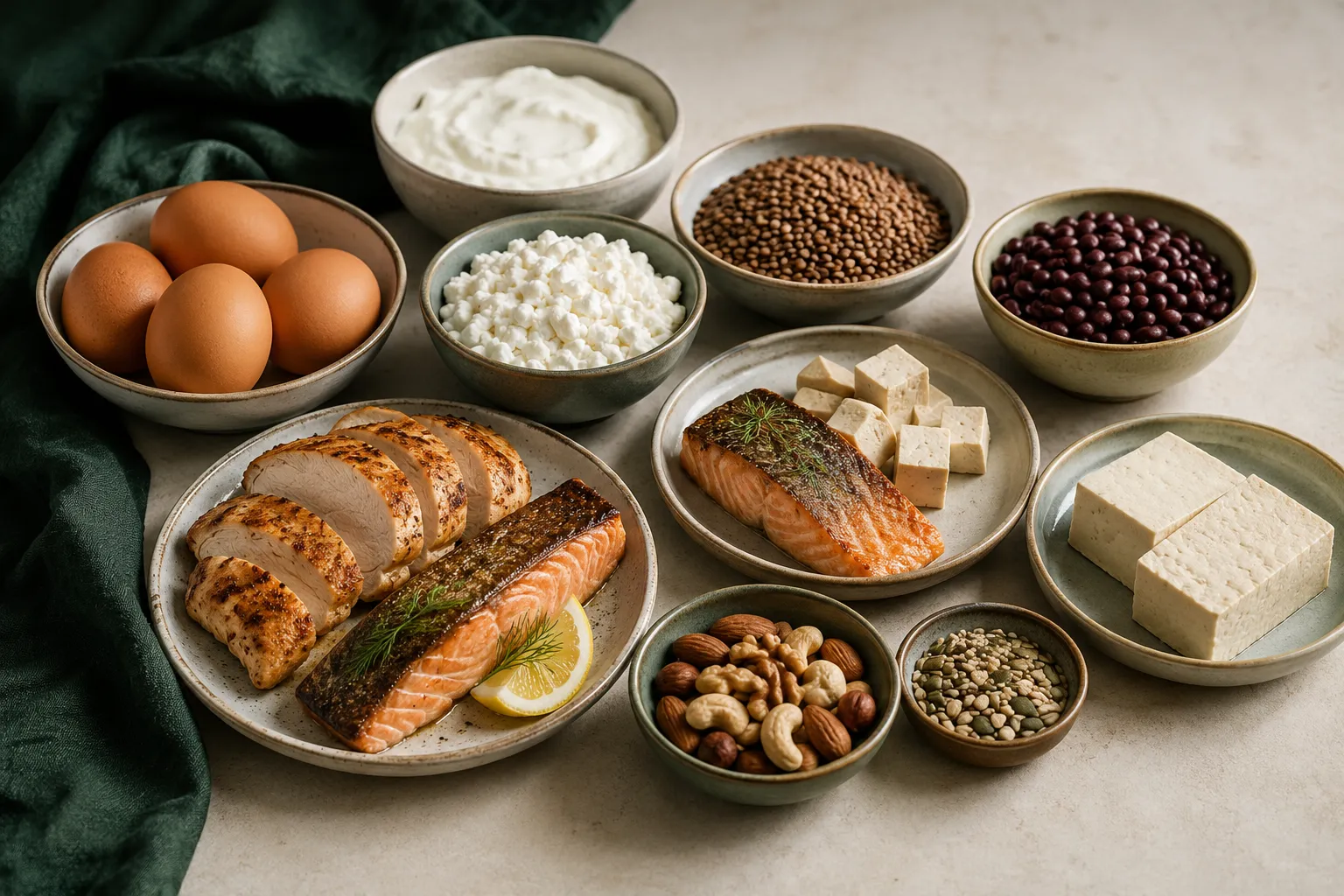
It also does not mean the food is “better” than an alternative that carries no claim at all. Plenty of everyday whole foods — eggs, legumes, fish, plain yoghurt — are naturally high in protein and simply do not advertise it on a label.
So read a protein claim as one true fact about one number, then read the panel and the ingredients list for everything else before you decide.
What this page does not do
It does not recommend products, set a protein target for you, or give medical advice. For guidance about your own diet, a registered dietitian or your doctor is the right person to ask. How these pages are researched, sourced and corrected is set out in our editorial standards.
Sources
- Nutrition content claims and health claims — Food Standards Australia New Zealand
- How to read food labels — Health New Zealand — Te Whatu Ora
- Nutrition, Health and Related Claims — a short guide to the Standard (P293) — Food Standards Australia New Zealand
General information only. Not personalised nutrition or medical advice.
Spotted something wrong? Corrections are welcome — email editorial@proteinnotes.com. How this page was researched is set out in our editorial standards.