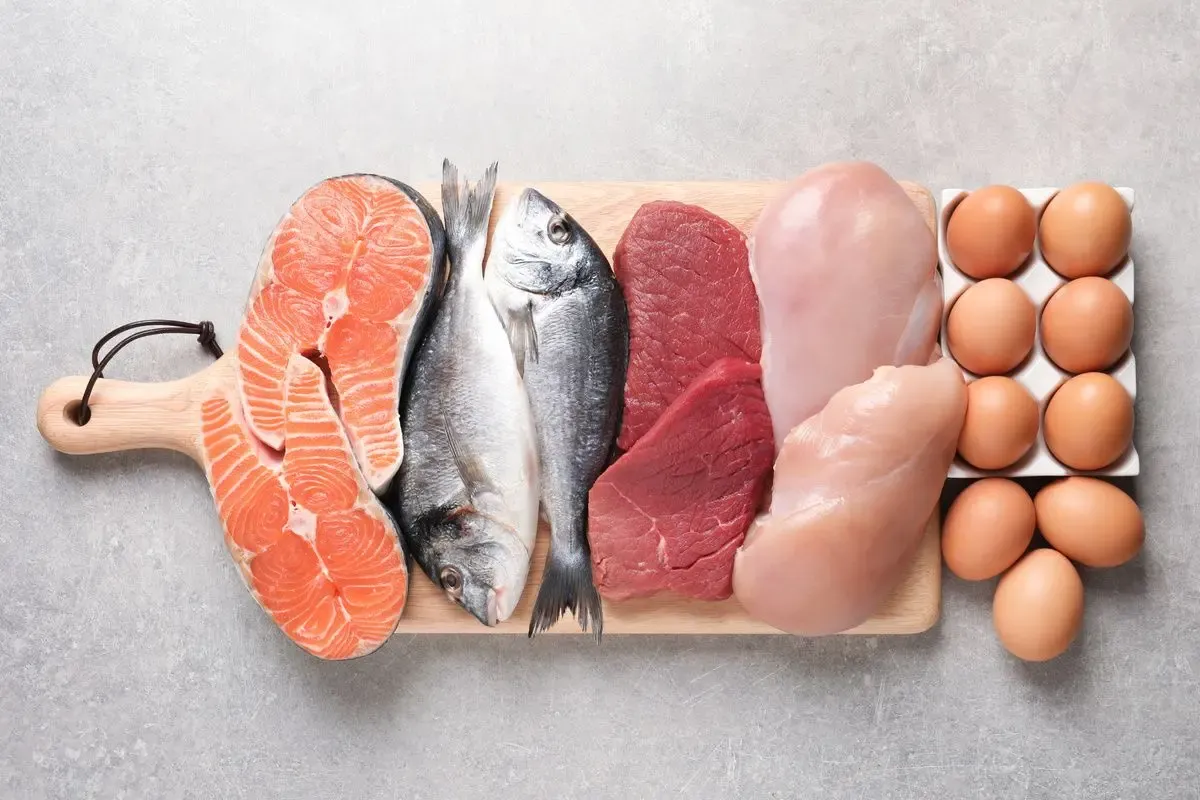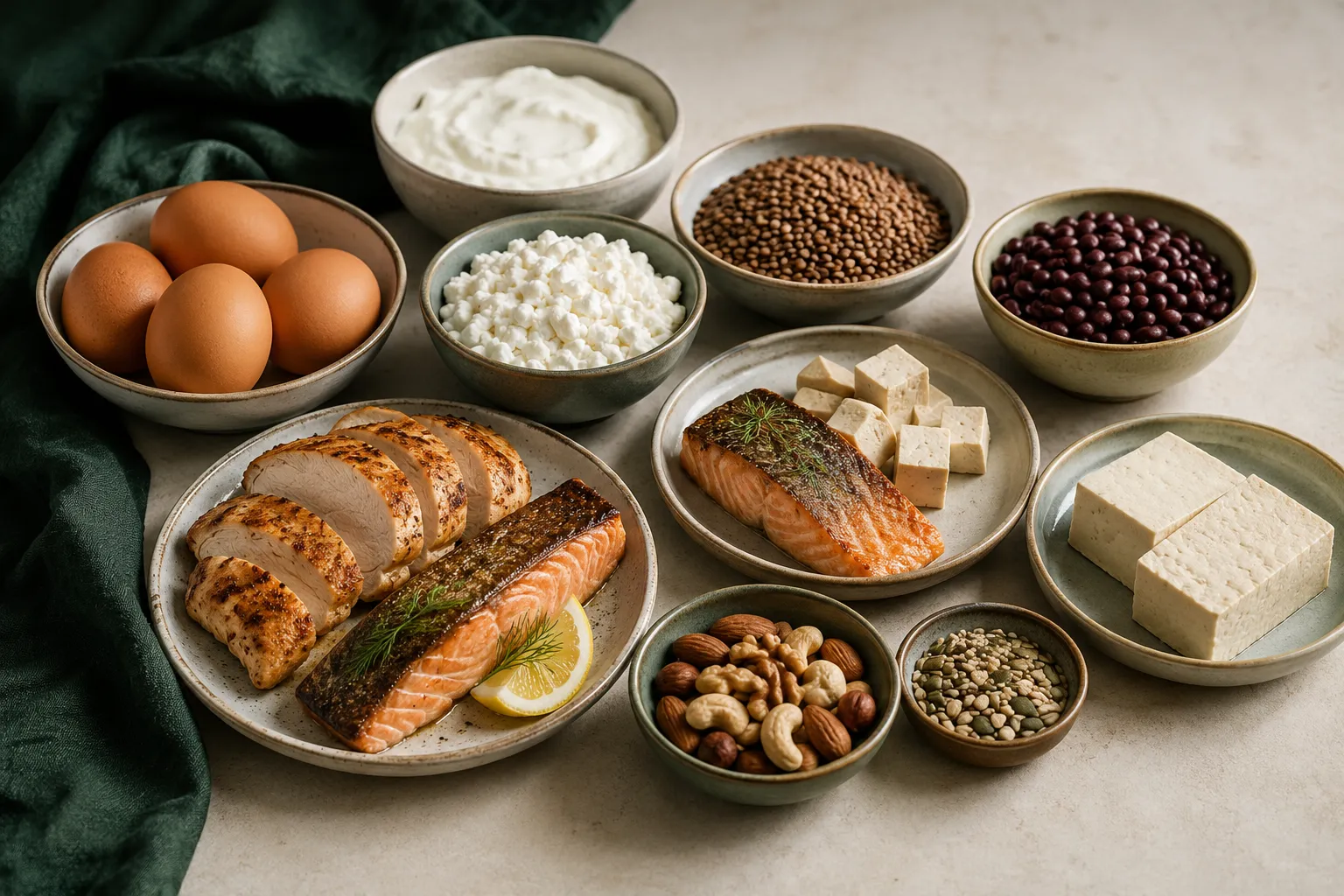

A short video doing the rounds makes a tidy, specific, checkable claim: that for about six dollars you can walk out of a supermarket with 100 grams of protein that needs no cooking. The food is a carton of ultra-pasteurised liquid egg whites. Mix in some zero-sugar chocolate syrup and, the argument goes, you have chocolate milk that is pure protein — exactly zero fat, exactly zero carbohydrate — for the price of a coffee.
Four assertions are being made, and all four can be checked against published nutrition panels and public regulations. Here is what happens when you do.
1. The cost claim is broadly right
On 31 August 2026, a 32 oz (946 ml) carton of Great Value 100% Liquid Egg Whites was listed at US$4.87. The panel gives 5 g of protein per 46 g serving, which works out to about 21 servings in the carton, or roughly 105 g of protein.
So: about a hundred grams of protein for around five US dollars. Call it six once you are outside a Walmart. As a statement about the price of protein in an American supermarket on a particular day, this holds up.
Two things it is not. It is not a general fact about liquid egg whites — it is one retailer’s house brand, in one country, on one day. And it is not yet a comparison, because a comparison needs the same measurement applied to whey, chicken, milk and whole eggs. We are collecting New Zealand shelf prices for exactly that and will publish it in the meals hub with the receipts attached.
2. “Exactly zero fat and exactly zero carbs” is a rounding rule, not a fact about eggs
This is where the claim starts to drift, and the word doing the damage is exactly.
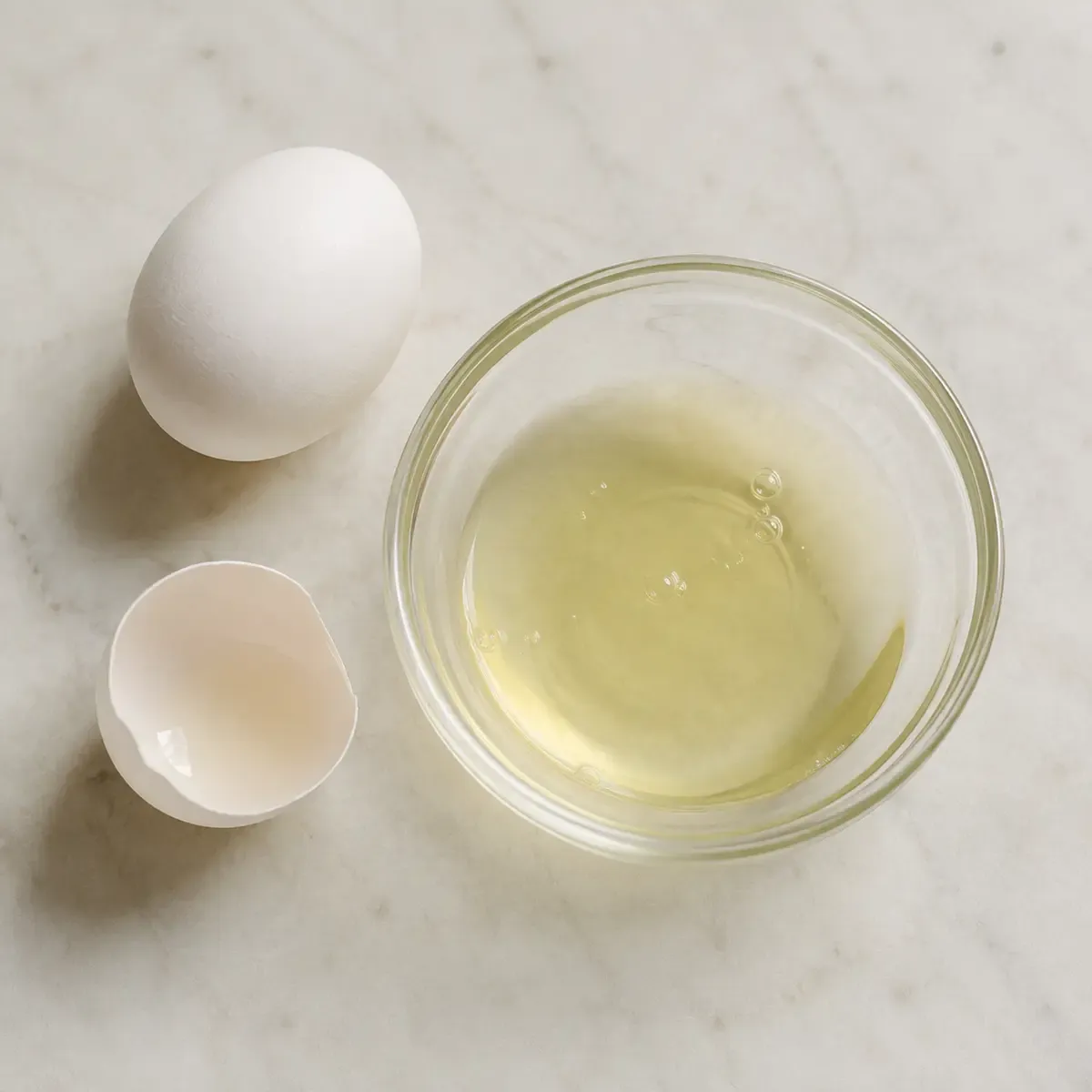
The USDA record for fresh raw egg white gives, per 100 g: 0.73 g of carbohydrate and 0.17 g of total fat. Scale that to the ~980 g in the carton and you get roughly 7 g of carbohydrate and about 1.7 g of fat. The carbohydrate is nearly all sugar — 0.71 g of the 0.73 g, the largest single component being glucose.
The label is not lying. It is following a rule. Under 21 CFR 101.9, if a serving contains less than 0.5 g of fat it must be declared as zero, and carbohydrate under 0.5 g per serving may likewise be expressed as zero. At a 46 g serving, egg white lands under both thresholds. Zero on the panel means below the reporting threshold for this serving size, not absent.
Does 7 g of carbohydrate matter? In calorie terms, barely — about 29 kcal in a carton of roughly 510. Nobody’s diet is going to turn on it. What matters is the reasoning: a claim of “exactly zero” built on a rounding convention will be wrong the moment someone applies it to a larger portion, and it teaches people to read labels as chemistry when they are closer to accounting.
3. “Pure protein” is the least accurate part
Per 100 g, egg white is 87.6 g water and 10.9 g protein. By weight it is about 11% protein and about 88% water.
It is genuinely lean — the protein makes up the overwhelming majority of what few calories are there, which is presumably what the clip is reaching for. But “pure protein” describes an isolate powder, not a food that is seven-eighths water. The distinction matters when you try to hit a protein target on it: a litre of liquid is not an interchangeable substitute for two scoops of something, and appetite and stomach volume are real constraints.
4. The syrup does what the egg whites are being praised for not doing
On its own terms the syrup claim is correct. Hershey’s Zero Sugar chocolate syrup declares 5 calories per tablespoon, 0 g protein and 0 g fat.
It also declares 2 g of total carbohydrate per tablespoon, from glycerin and erythritol high in its ingredient list. Three tablespoons is 6 g of carbohydrate — comparable to what is in the entire carton of egg white. The calories stay negligible because those particular carbohydrates carry almost none. But a drink described as having zero carbohydrate gets most of its carbohydrate from the mixer, which is a strange place for the argument to land.
5. The thing the clip never mentions is the cooking
Pasteurised is not the same as cooked, and the gap is smaller than it sounds but matters more than it sounds.
Under 9 CFR 590.570, liquid egg white must be held at a minimum of 134 °F (56.7 °C) for 3.5 minutes. The American Egg Board puts the onset of egg white coagulation at 144 °F (62.2 °C), fully set by 149 °F (65 °C). The regulatory floor sits about five degrees below the point where the protein would start to set — which is the design goal, because the product has to pour.
Individual manufacturers do not publish their exact time and temperature, and “ultra-pasteurised” is not a defined standard for egg white in the way it is for milk, so we cannot tell you what any particular carton was held at. We do not need to. The proof is in your hand: it is still liquid. Egg white that had been heated far enough, for long enough, to behave like cooked egg would look like cooked egg. Pasteurisation is a food safety step, and a good one. It is not a cooking step.
That distinction is not cosmetic. Cooking egg protein substantially improves how much of it is actually digested and absorbed; the protein in a raw egg is measurably less available to you than the same protein once heat has unfolded it. The best human evidence on this compared cooked with raw egg protein and found a large gap in favour of cooked.
We are deliberately not going to put a percentage in front of you. That study used five people, all with ileostomies, eating egg rather than pasteurised liquid egg white. As far as we can find, nobody has directly measured the digestibility of the product on the supermarket shelf. What we can say with confidence is the direction: a carton labelled 100 g of protein, drunk cold, does not deliver 100 g of protein to you, and the shortfall is not trivial. How large it is, we do not know, and neither does anyone else claiming otherwise.
Which means the headline number is the one claim in the clip that cannot be rescued. The price is right. The protein figure on the label is right. The protein figure you get is lower, and the sales pitch is built on the label.
6. A small irony about biotin
Raw egg white contains avidin, a protein that binds biotin tightly enough to block its absorption. The NIH Office of Dietary Supplements states this plainly, and notes that cooking denatures avidin so that it can no longer interfere. Pasteurisation, per section 5, is not cooking.
This is a real interaction, not a scare. We are not going to tell you how much raw egg white over how long would matter, because we could not find a figure we trust for that, and inventing one would be worse than leaving the gap. It is worth knowing about if drinking egg whites becomes a daily habit rather than a novelty.
The syrup, for what it is worth, lists added biotin among its ingredients.
What we could not check
- Prices outside one US retailer on one day. Everything in section 1 is a snapshot. New Zealand pricing is coming, with dates and receipts.
- The actual digestibility of pasteurised liquid egg white. No direct measurement appears to exist. Section 5 reasons from adjacent evidence and says so.
- A biotin threshold. Deliberately left open.
- What temperature any given carton was actually held at. Manufacturers do not publish it. We reason from the regulatory minimum and from the fact that the product still pours.
- Whether it tastes good. We have not made it.
- The USDA figures are for fresh shell egg white, not a carton product. They line up closely — the sodium on the retail panel matches the USDA value almost exactly, which suggests nothing has been added — but they are not the same measurement.
Protein quality is a separate question from protein quantity, and it is the one this claim really runs aground on. We are writing that up next in how protein quality is actually scored.
If you have seen a claim like this one and want it checked, send it over — the working notes for this site are public in the log.
Sources
- Egg, white, raw, fresh — SR Legacy, FDC ID 172183 — USDA FoodData Central
- 21 CFR 101.9 — Nutrition labeling of food — eCFR
- 9 CFR 590.570 — Pasteurization of liquid egg products, Table I — U.S. Government Publishing Office
- Coagulation and thickening — real egg functionality — American Egg Board
- Biotin — Fact Sheet for Health Professionals — NIH Office of Dietary Supplements
- Digestibility of cooked and raw egg protein in humans as assessed by stable isotope techniques — Evenepoel P et al., The Journal of Nutrition 1998;128(10):1716–1722
General information only. Not personalised nutrition or medical advice.
Spotted something wrong? Corrections are welcome — email editorial@proteinnotes.com. How this page was researched is set out in our editorial standards.